
A Practical Guide to Lead Nurture Sequences for Professional Service Growth
Professional service businesses lose more opportunities from silence than from competition.
A prospect reaches out through your website, fills out a form, or requests more information. You respond. There may be a short exchange or even an introductory call. Then communication slows or stops. Days turn into weeks, and eventually the opportunity disappears.
This happens every day across consulting, technology services, accounting, legal, and advisory businesses. Not because the prospect was not interested, but because nothing guided the relationship forward.
Most prospects are not ready to make a decision right away. They need time to understand their problem, compare options, and decide what level of investment makes sense. When there is no follow up during this period, interest fades. Prospects move on to professional services businesses that stay visible.
This is not a lead generation problem. It is a follow up problem.
A lead nurture sequence is one of the simplest and most effective ways to solve it.
Why Professional Service Leads Go Cold
Professional service decisions are rarely immediate. They involve trust, risk, and long-term impact. A single email or call is almost never enough to move a prospect forward.
After initial contact, most prospects enter a quiet evaluation phase. They research options, talk internally, and weigh priorities. If your business disappears during this phase, the opportunity weakens even if the need still exists.
When follow-up is unstructured or inconsistent, three predictable things happen.
First, urgency fades. Without guidance, the problem feels less pressing.
Second, uncertainty grows. Prospects are unsure what working with you would involve, how long it would take, or what it would cost.
Third, competitors fill the gap. Professional services businesses that continue to educate and communicate earn trust and become the default choice.
A lead nurture sequence prevents this outcome by maintaining presence and clarity over time.
What a Lead Nurture Sequence Really Is
A lead nurture sequence is a planned series of emails sent over time after a prospect first reaches out.
These emails are not aggressive sales messages. They are helpful touchpoints designed to explain what you do, how you work, and what prospects should realistically expect.
A strong nurture sequence does four important things.
- It keeps your business visible during long decision periods.
- It educates prospects before sales conversations begin.
- It sets expectations around timelines, process, and investment.
- It allows misaligned prospects to opt out on their own.
When done correctly, nurturing does not feel pushy. It feels professional, helpful, and reassuring.
How to Build a Simple Lead Nurture Sequence Step by Step
You do not need a complex system to get started. Most professional services businesses benefit from a five to six email sequence spread over several weeks.
Below is a practical framework designed for services with longer decision cycles.
Email One: Immediate Follow Up and Next Steps
Timing: Same day as inquiry
This email confirms that the prospect reached the right place. It thanks them for reaching out, confirms receipt of their inquiry, and explains what happens next.
It also introduces how your business typically works, which begins setting expectations early and establishes credibility.
Email Two: Explaining the Real Problem
Timing: About three days later
Many prospects think they need a quick fix when the real issue is deeper.
This email focuses on education. It explains common mistakes, misunderstandings, or oversimplified approaches related to your service. The goal is to help the prospect better understand their situation.
When prospects learn something new, trust begins to form.
Email Three: Showing a Real Example
Timing: About one week after inquiry
At this stage, prospects want reassurance.
This email shares a short example of how you helped a similar business. It does not need to be detailed. Context, approach, and outcome are enough.
The goal is recognition. Prospects should see themselves in the story.
Email Four: Addressing a Common Concern
Timing: About two weeks after inquiry
Most prospects hesitate for predictable reasons. Cost, time, disruption, or internal readiness are common concerns.
This email addresses one concern directly and honestly. It also reinforces that meaningful results require commitment.
This step naturally filters out prospects who are only looking for the cheapest or fastest option.
Email Five: Offering a Clear Next Step
Timing: Around three weeks after inquiry
By now, aligned prospects are more informed and more confident.
This email invites the next step without pressure. That might be a consultation, an assessment, or a deeper resource. The message is simple.
When you are ready, here is how to move forward.
Ongoing Follow Up: Staying Visible Over Time
Not every prospect moves quickly. Some need months.
After the initial sequence, prospects should continue receiving occasional educational emails. Monthly touchpoints are often enough to maintain visibility without becoming noise.
Professional services businesses that stay present over time win more often than those that disappear.
How Lead Nurture Sequences Improve Lead Quality
One of the most valuable benefits of lead nurturing is improved lead quality.
As prospects receive education and clearer expectations, they begin to self select.
Prospects focused only on price or quick fixes tend to disengage. Prospects who value experience, structure, and long term results remain engaged.
This improves the sales process. Conversations are more focused. Prospects arrive better informed. Trust begins before any proposal is discussed.
For professional services businesses, nurturing is not about getting more leads. It is about preparing the right ones.
Why Automation Is the Most Efficient Way to Nurture Leads
Lead nurturing only works when follow up is consistent, and consistency is where most businesses lose efficiency.
Manual follow up relies on memory, reminders, and available time. As workloads increase, messages are delayed or skipped, and prospects quietly fall through the cracks. This creates wasted effort and missed opportunities.
Automation replaces that friction with a system. Once set up, follow up runs automatically, every prospect receives the same timely communication, and no additional daily effort is required. The result is a more efficient use of time, fewer lost leads, and a smoother path from inquiry to conversation.
With an automated nurture system, follow up is set up once and runs in the background. Every prospect receives the same helpful, educational emails at the right time without requiring daily attention.
You do not need to track who needs a follow up or decide what to send next. The system handles that for you.
Through the Digital Marketing Toolkit offered by WT Digital, automated lead nurture sequences are designed specifically for professional services businesses. The messaging focuses on education and expectation setting rather than pressure.
What Automation Looks Like in Practice
Here is a simple example.
A prospect fills out a contact form on your website.
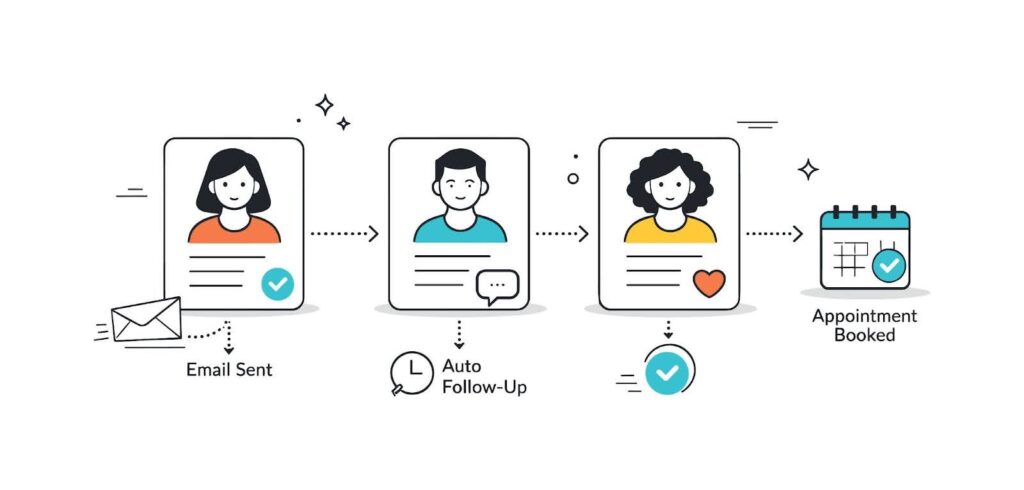
They immediately receive a confirmation email explaining what happens next. A few days later, they receive an educational email that helps them better understand their problem. The following week, they receive an example showing how you have helped similar businesses. Over the next few weeks, additional emails address common questions and outline next steps.
All of this happens automatically.
You are not sending individual emails or tracking dates. When the prospect is ready, they reach out already informed and aligned. If they are not a fit, they disengage without consuming your time.
This is how automation supports better conversations, not more work.
Common Mistakes to Avoid
Many professional services businesses attempt to follow up but undermine it with a few common mistakes.
These include sending sales messages too early, using generic content, avoiding conversations about budget or timelines, and treating every inquiry as a good fit.
An effective nurture sequence does the opposite. It slows the process, raises expectations, and allows prospects to decide whether the fit is right.
What Changes When Nurturing Is Done Well
When lead nurturing is structured and consistent, the entire sales process improves.
Prospects arrive informed. Conversations are more productive. Expectations are aligned earlier. Trust is established before decisions are made.
Instead of chasing interest, professional services businesses attract readiness.
This is how marketing stops feeling reactive and starts supporting steady, sustainable growth.
Start With the Right Foundation
If your business is generating inquiries but follow up feels inconsistent or reactive, the issue is rarely effort. It is the absence of a system that works for you.
WT Digital’s Launch Plan is built for professional services businesses that want a simple, automated way to stay in touch with prospects without managing complex systems. It focuses on building the foundation: consistent follow up, clear messaging, and an automated nurture sequence that runs continuously.
You do not need advanced tools to get started. You need a system that ensures every inquiry receives a professional, educational experience.The most effective nurture sequences do not push prospects forward. They prepare them.
About the Author
Mark Itzkovitz
Owner
Digital marketing agency founder with 18+ years experience. Former IT expert turned marketing strategist for MSPs and IT providers. Combines tech knowledge and marketing skills to deliver lead generation solutions for business owners.